
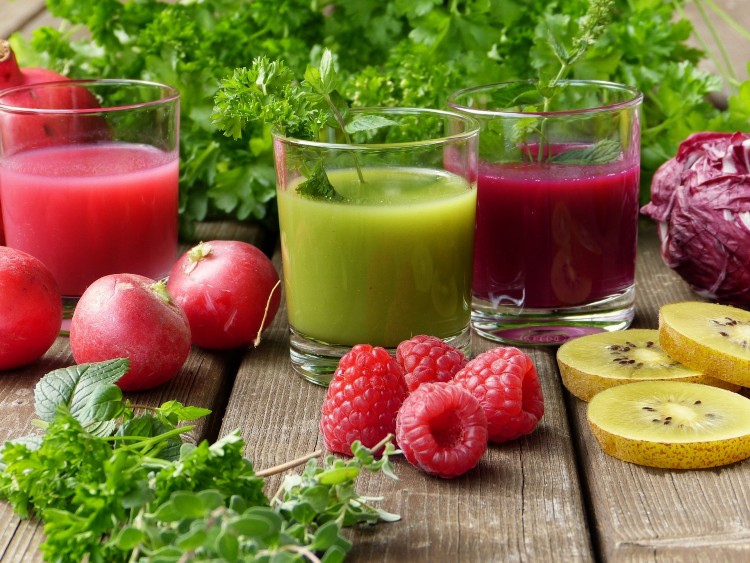
One of the reasons that life is exciting is that we live in a trending world. Although the word “trending” has assumed greater significance with the social media phenomena. Things come and go as new trends emerge! It is the same thing with juicing. Juicing has become very popular in recent times because of the acclaimed health benefits.
According to Forbes, the juicing market is now worth $3.4 billion. Since Juice Generation started in 1999 selling fresh-pressed juices in their shops, the obsession for juices for health and wellness has skyrocketed. Juice has now become part of the regular diets of many. In addition, social media has also driven the fellowship of this new food movement because people would like to be counted among this food trend. Now we have several juice shops and bars in many places all over the world!
In the UK, IBISWorld Market Research shows that revenues from Juice and Smoothie Bars are expected to be £87.2 million in 2018, with a forecast growth rate of 8.7% between 2014 and 2019 (Ibisworld.co.uk, 2018).
In this post, I will discuss what juicing is and whether it is better or healthier, including any evidence to back it up.
What is Juicing?
Juicing is the process of extracting the juices from fresh fruits or vegetables. They are known by many names such as fast, cleanser, cleanses or detoxes, deepening on the purpose the juice is created to serve. In other words, the process of juicing extracts the natural liquids, vitamins, and minerals from the fruits and vegetables so that you are left with the liquid to drink. The fibre is discarded.
What Is The Difference Between Juicing And Smoothies
It can be confusing whether and smoothies are the same or is there any difference between them, especially now that we can also make green juices? The difference between juices and smoothies lies in the difference between blending and juicing.
When you blend something, the whole thing is liquidized. For example, if you blend tomatoes with a cup of water, the tomatoes become crushed and mixed together with the water. So, basically, you are digesting the whole tomatoes mixed with the glass of water. By contrast, when you are juicing, only the liquid is extracted, but the fibre is not included.
Blending and juicing can be done using common household blenders and juicers which can be found in shops. However, for the best juicers and blenders that will enable you to get maximum results, follow the link below to view them.
Why Juice Or Blend Instead Of Eating Raw?
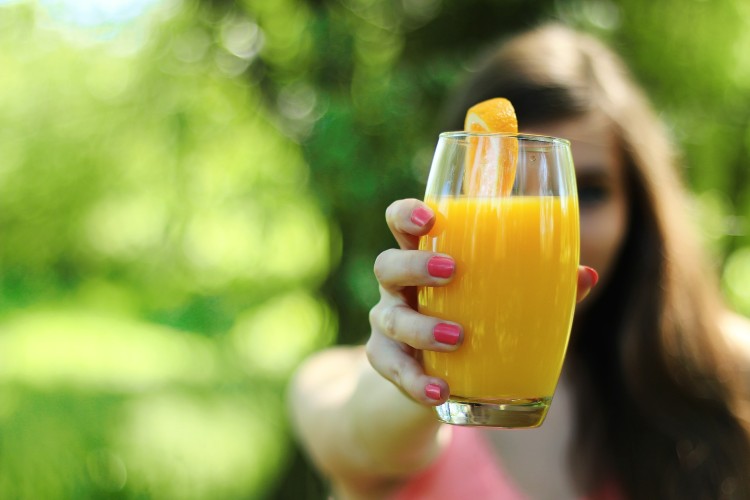
I think this is the question that many people would likely ask, especially in terms of fruit. Why do you have to go through the process of juicing or blending when you can eat the fruit itself. As already stated above, juicing squeezes out the juice from fruits and vegetables. The juice contains what is known as phytonutrient, also known as phytochemicals, which are natural chemicals or compounds produced by plants. They keep plants healthy, protecting them from insects and the sun. They also contain antioxidant and anti-inflammatory properties that can help nurture a healthy human body.
However, it has to be noted that since juicing only extracts the juice from fruits and vegetables, the fibre from the fruits and vegetables which is also healthy is lost.
Despite that, some juicing enthusiasts are of the view that juicing can reduce the risk of cancer, boost your immune system, help remove toxins from your body, aid digestion, and helps in weight loss. In addition, they are of the opinion that juicing is better than eating whole fruits and vegetables since the nutrients are absorbed better. When you drink juice, the digestive system does not have to work harder, as usual, to break down the fibre because it has been removed. However, there is no published scientific evidence at the moment to show that juicing is better than eating whole fruits or vegetables.
Juice and Smoothie, Which Is Better?
Many people would say that smoothies are healthier than juices because blending allows the fibre to be included. Others would say that there is none is healthier than the other since they serve different purposes. As already mentioned above, the process of juicing is such that the nutrients are made ready for absorption into the body without the fibre. This will probably be better for people that are suffering from illnesses that do not allow the body to process fibre well since the fibre in fruits and vegetables take longer to digest and nutrients are released into the body systematically. However, you need to be careful when juicing sweet fruits like oranges. For example, to get a glass of orange juice, you may need to use 4 to 5 oranges. If you are eating them whole, it is not likely that you will eat 4 oranges at one go; but if you are juicing, this would be only a glass of orange juice. So, if you are doing this at regular intervals, you need to be careful as you are getting the sugar from those oranges, which can affect your body sugar level. For this reason, juicing should be seen as a supplement to your normal fruit dietary intake.
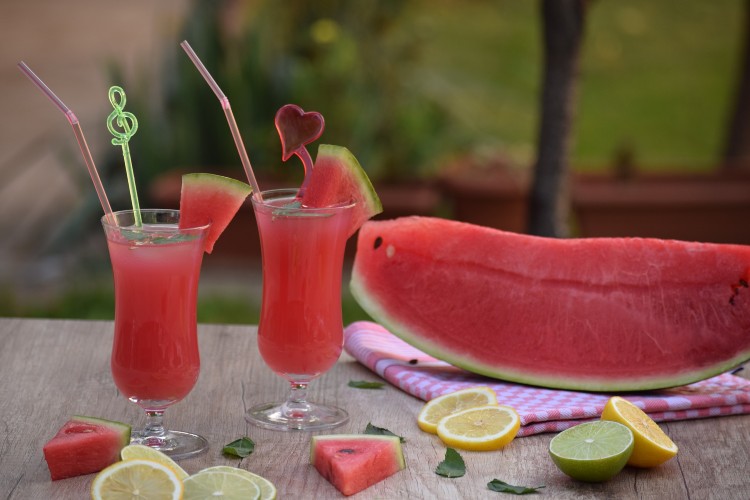
On the other hand, smoothies are prepared using blenders that crush the fibre and mix it with the liquid so that you are consuming both the fibre and the liquid, unlike juicing. The advantage of smoothies is that they are high in volume and can make you full. In this way, it can be taken as a morning breakfast. In addition, according to a recent study at Harvard School of Public Health, consumption of whole fruits can significantly lower the risk of type 2 diabetes (Muraki I, 2018). By contrast, consumption of juice can lead to a higher risk of type 2 diabetes as already pointed out above. For example, in another study at Harvard School of Public Health, it was observed that our cholesterol falls if we eat whole apples but increases with clear juice (Ravn-Haren G, 2018).
So, from these two studies, it can be seen that consuming smoothie is more beneficial because the fibre from fruits and vegetables excluded by juicing is also beneficial to the body.
According to a research published on National Center for Biotechnology Information (NCBI), the following were observed (Uckoo RM, 2018):
- Grapefruits contain several phytochemicals that are known to be beneficial for maintaining health. Changes in the levels of these phytochemicals depend on the common household processing method used, such as blending, juicing, and hand squeezing.
- Grapefruit juice processed by blending had significantly (P < 0.05) higher levels of flavonoids (narirutin, naringin, hesperidin, neohesperidin, didymin, and poncirin) and limonin compared to juicing and hand squeezing.
- No significant variation in their content was noticed in the juice processed by juicing and hand squeezing.
- Ascorbic acid and citric acid were significantly higher (P < 0.05) in juice processed by juicing and blending, respectively.
- Hand squeezed fruit juice had significantly higher contents of dihydroxybergamottin (DHB) than juice processed by juicing and blending. Bergamottin and 5-methoxy-7 gernoxycoumarin (5-M-7-GC) were significantly higher in blended juice compared to juicing and hand squeezing.
Juicing, Blending and Antioxidants
Juice fasting also is known by many names such as juice cleansing, juice detox, etc. It is a period in which a person abstains from solid food but only consumes fruit and vegetable juices. It is used for the purpose of detoxification as an alternative to medicine and to lose weight by abstaining from solid food. Some people juice for fasts for just a few days, while others do it for weeks at a time.
Though many people claim they lead to quick weight loss, there is no scientific evidence to support this claim. In fact, staying away from solid food can have health implications because the body needs them as well to function properly.
Some people think these are fad diets as the body naturally carry out detoxification through the kidney and liver since a healthy liver or kidney can flush toxins out of the body. In addition,fiber-rich whole grains, fruits, vegetables, and drinking enough water enable the intestines to safely detoxify the body naturally.
Weight Loss and Smoothies
Weight loss smoothie, also known as detox smoothie, is s beverage that you can make at home using healthy ingredients with low calories. The purpose is to serve as a substitute for meals or unhealthy snacks. They are usually made with fresh vegetables and fruit with large amounts of water to help in hydrating the body and flushing out toxins.
Whether people believe it or not, there are a lot of amazing stories of people that have achieved quick weight loss using smoothies and because there are so many testimonials, it shows it works. But you need to know the appropriate combination of ingredients that is good for you, depending on you state of health.
References
Harvard Medical School, (2015). Juicing — Fad or Fab? [online] Available at: https://www.health.harvard.edu/healthy-eating/juicing-fad-or-fab [Accessed 19 Oct. 2018].
Hua, K (2016). Page title. [online] Why Juice Generation and the Juice Cleanse Trend Have Survived So Long. Available at: https://www.forbes.com/sites/karenhua/2016/12/30/2017-new-year-resolutions-why-juice-generation-and-the-juice-cleanse-trend-have-survived-so-long/#3e473e3d2fd4 [Accessed 18 Oct. 2016]
Ibisworld.co.uk. (2018). Juice & Smoothie Bars (UK) – Industry Research Reports | IBISWorld. [online] Available at: https://www.ibisworld.co.uk/industry-trends/market-research-reports/accommodation-food-service-activities/juice-smoothie-bars.html [Accessed 21 Oct. 2018].
Muraki I (2018). Fruit consumption and risk of type 2 diabetes: results from three prospective longitudinal cohort studies. – PubMed – NCBI. [online] Ncbi.nlm.nih.gov. Available at: https://www.ncbi.nlm.nih.gov/pubmed/23990623 [Accessed 20 Oct. 2018].
Ravn-Haren G, e. (2018). Intake of whole apples or clear apple juice has contrasting effects on plasma lipids in healthy volunteers. – PubMed – NCBI. [online] Ncbi.nlm.nih.gov. Available at: https://www.ncbi.nlm.nih.gov/pubmed/23271615 [Accessed 20 Oct. 2018].
Uckoo RM, e. (2018). Grapefruit (Citrus paradisi Macfad) phytochemicals composition is modulated by household processing techniques. – PubMed – NCBI. [online] Ncbi.nlm.nih.gov. Available at: https://www.ncbi.nlm.nih.gov/pubmed/22957912 [Accessed 20 Oct. 2018].