
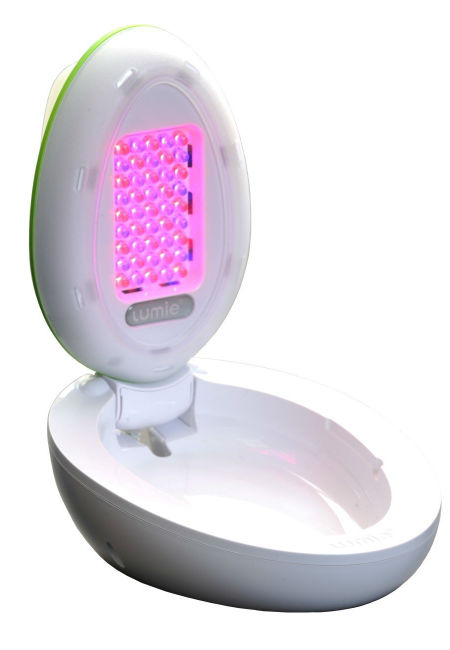
Got acne? Can’t seem to get rid of it? Are you tired of pills, creams, and masks that don’t seem to be producing results? Have you suffered those horrible side effects? Don’t worry, Lumie Clear is gentle, yet effective, light therapy for acne.
As the name implies, Lumie Clear is manufactured by Lumie and has been developed in conjunction with leading dermatologists. It clearly is the easy way to treat acne without the risk of harmful side effects of medicines.
What Is Acne?
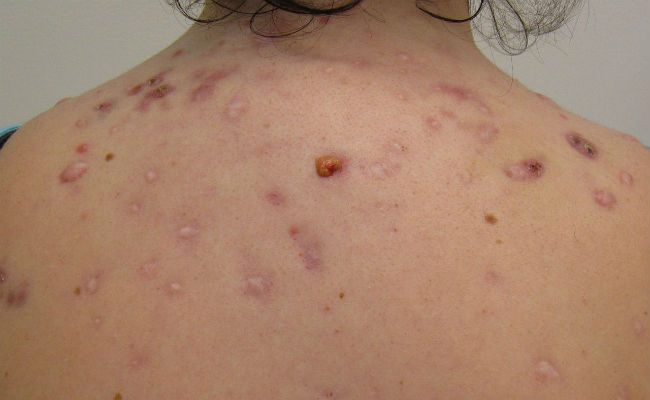
Acne is a very common skin condition that affects a lot of people It is likely that most people will be affected by acne at some point in their lives, especially in their younger years. The obvious consequence of this condition is that it leaves spots on the skin, mainly on the face, and sometimes even on the neck, chest, shoulders, and back.
As a medical condition, it is not generally regarded as a serious condition. However, some are mild, while others are severe causing pain, discomfort, and embarrassment especially when it affects the face.
According to the National Health Service (NHS) in the UK, acne affects:
- About 80% of people aged 11 to 30 are affected by acne.
- Almost everyone on the face.
- More than half of people are affected at the back.
- About 15% of people are affected by the chest.
- It is known to be most commonly caused by changes in hormonal levels, typically during puberty.
The skin is made up of tiny dots or holes, known as pores, which can be seen on the surface of the skin, though it is more visible on the face and nose because the glands are bigger there. These pores are openings for oily substances called sebum to be released on the surface of the skin to lubricate the skin and keep it supple and smooth. Sebum is produced in sebaceous glands beneath the surface of the skin. These glands are attached to hair follicles. Each oil gland has a hair follicle in it, and the opening of that follicle and gland on the surface of our skin is the pore we see. The hair follicle is responsible for growing hair in the body and where hair comes out of. So, we have pores all over our bodies. The exceptions are the palms of the hands and the soles of our feet because they have no hairs.
What happens is that in some cases, the hair, sebum, and skin cells clump together into a plug. The bacteria in the plug cause swelling. Then when the plug starts to break down, it causes acne. This may be because of too much sebum which blogs the pores, causing them to be infected by bacteria called Propionibacterium acnes (PA), which cause acne. These bacteria release enzymes that digest sebum and at the same time also damage skin cell walls. The body’s immune system will then response, causing inflammation.
Skin Types and Acne
Acne may also respond to treatment depending on skin types, so that a treatment that is good for one person may not be good for another because of different skin types.
Oily and Dry Skin
Before now it was thought that acne occurs on oily skin since acne occurs when you have excess oil called sebum in the body as already mentioned above. However, now it is known that acne can affect all types of skin, including dry, skin as genetics and hormones affect skin types and acne. For this reason, some people with dry skin may have acne while others with oily skin don’t.
Sensitive or Resistant Skin
Some people have sensitive skin so that they will develop redness and irritation any time they come into contact with any chemical. Others have resistant skin so that they are not allergic to chemicals. In this way, a treatment that works for sensitive skin may not work for resistant skin.
Loose and tight skin
The way people with loose skin hold their heads determines whether the blemishes are visible. For example, If you have loose skin and you point your chin down, blemishes may disappear into your skin. If you gaze upward toward the ceiling, your skin may loosen and reveal all. Tight skin is obviously clear or blemished all the time. Unless you plan to look at the ground for the rest of your life, considering the tightness or looseness of your skin is a critical factor when choosing the right acne product.
Pigmented or non-pigmented skin
Skin pigmentation refers to the colouring of the skin. Skin pigmentation disorders affect the colour of your skin. Some skin types are much more prone to change colour—either darker or lighter—as acne heals. Your skin gets its colour from a pigment called melanin. Special cells in the skin make melanin. When these cells become damaged or unhealthy, it affects the production of melanin. Some pigmentation disorders affect just patches of skin. Others affect your entire body. If you have olive, tan, black, or Asian skin, chances are you will have more problems from changes in pockets of pigments in your skin than you will from acne itself.
Types of Spots and Acne
According to the National Health Service (NHS) in the Uk, there are 6 types of spots acne can cause as follows:
- Blackheads – They are small bumps that appear on your skin due to clogged hair follicles. They are called blackheads because the surface looks dark or black. They’re not filled with dirt but are black because the inner lining of the hair follicle produces pigmentation. Blackheads are a mild type of acne that usually form on the face, but they can also form on the back and chest.
- Whiteheads – These are formed when dead skin cells, oil, and bacteria become trapped within one of your pores. When the trapped sebum and bacteria stay below the skin’s surface, a whitehead is formed. They may have a similar appearance to blackheads, but may be firmer and won’t be easily squeezed.
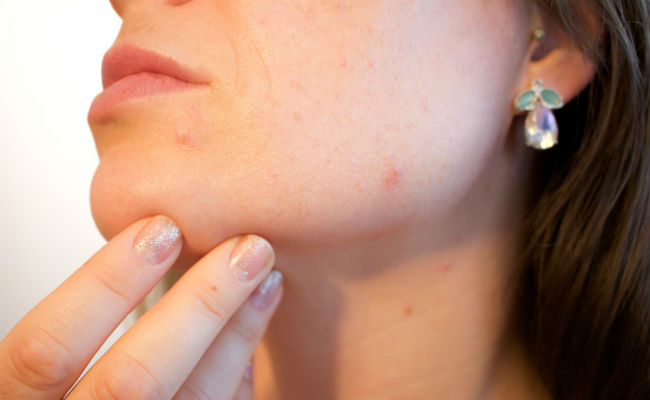
- Papules – These are small red bumps that may feel tender or sore. They reveal no visible pores like blackheads and do not have white like whiteheads. They are closed, red and surrounded by skin inflammation.
- Pustules – These are small blisters or pimples on the skin similar to papules. However, they have a white tip in the centre, caused by a build-up of pus.
- Nodules – These are large hard lumps that develop beneath the surface of the skin and can be painful.
- Cysts – These are the most severe type of spots caused by acne. They are large pus-filled lumps that look similar to boils and carry the greatest risk of causing permanent
What Is Lumie Clear Acne Treatment
Lumie, a specialist in the manufacture of medical devices. Since 1991, Lumie has been involved in researching and designing bright lights for the treatment of SAD and other conditions. Lumie designed the first Bodyclock which was the world’s first alarm wake-up light that pioneered SAD light technology. Their products are certified to the Medical Devices Directive (93/42/EEC) and supplied to the NHS Distance and brightness levels (lux). They are independently verified and Lumie is registered with the government’s Medicines and Healthcare Products Regulatory Agency.
For more details about SAD and Lumie SAD Lightbox, please click this link here for my review of this product.
Lumie Clear is a compact hand-held LED light therapy device that is easy to use because of its flexibility. It works by combining blue light with the red light. The blue light attacks the bacteria (PA) that causes acne while the red light soothes the inflammation and enhances healing.
Research has shown that acne improves after spending time in the sun. According to a study of light effects on over 100 patients by Dr Tony Chu, a leading dermatologist at Hammersmith Hospital in London, those that used a combination blue-red light therapy saw a real difference after 4 weeks. At 12 weeks their skin was, on average, 76% less inflamed and 56% clearer. The findings from this research have been used in the development of Lumie Clear.
The good news is that PA can be killed by light, specifically visible blue light, which doesn’t harm the rest of the skin. The PA produces a tiny, light-reactive molecule called porphyrin and this absorbs the blue light and converts it to heat energy.
This activity destroys bacteria. Lumie Clear has a blue and a red light. The blue light kills PA and the red light helps to calm and heal the skin as it clears from spots. With continued use of combined blue and red light it can help reduce PA growth and stop new spots from developing, improving the appearance of the skin.
Features of the Product
Product Name: Lumie Clear – Acne Treatment at Home with Red and Blue Light Therapy
Manufacturer: Lumie
Price: Varies
Typical treatment time: 15 minutes daily
Detachable head: Yes
Adjustable: folds into base
Goggles included: Yes
Adjustable stand: Yes
Timer: Yes
Typical treatment time: 15 minutes daily
Bulb(s): Blue LEDs (415 nm) and red LEDs (660 nm)
Size: (H x W x D): 10 x 15 x 20 cm
Guarantee: 3-year guarantee
Classification: Class IIa medical device
Weight: 675 g
Benefits Lumie Clear – Acne Treatment at Home with Red and Blue Light Therapy
Lumie Clear has no side effects at all. In addition, it is easy to use without any inconvenience. It is not invasive and can also be used safely in conjunction with other treatments. Unlike drugs and creams, Lumie Clear is a one-time expense that can actually work out cheaper in the long-term. Furthermore, it has the following benefits:
- Lumie Clear is developed by experts in dermatology.
- It is clinically proven and a certified Medical Device (class 2a).
- A combination of red and blue light which saves you from having two separate treatment sessions.
- Lumie Clear is a treatment for mild to moderate acne, without the side effects of drugs and creams.
- The Blue LEDs kill acne bacteria while red LEDs reduce inflammation and heal the skin.
- You only need to use Lumie Clear for 15 minutes close up each day to see a real difference within four weeks
How It Works
Lumie Clear has no side effects at all. In addition, it is easy to use without any inconvenience. It is not invasive and can also be used safely in conjunction with other treatments. Unlike drugs and creams, Lumie Clear is a one-time expense that can actually work out cheaper in the long-term. Furthermore, it has the following benefits:
- Lumie Clear is developed by experts in dermatology.
- It is clinically proven and a certified Medical Device (class 2a).
- A combination of red and blue light which saves you from having two separate treatment sessions.
- Lumie Clear is a treatment for mild to moderate acne, without the side effects of drugs and creams.
- The Blue LEDs kill acne bacteria while red LEDs reduce inflammation and heal the skin.
- You only need to use Lumie Clear for 15 minutes close up each day to see a real difference within four weeks
The time needed for the treatment using Lumie Clear depends on your distance from the lights. If Lumie Clear is held next to your skin, you only need to use it 15 minutes per day. If you want to treat a wider area of your skin, for example, your back and shoulders, you can fix the light head onto its base and shine it on your skin for an hour from the recommended distance. One advantage of using Lumie Clear is that it has a combination of red and blue light, which saves you from having two separate treatment sessions. You can follow this link here to watch videos of how it works and listen to testimonials of people that have experienced Lumie Clear treatment.
Conclusion
Common reasons for some of the negative reviews are that it did not work for them, some think it is time-consuming as they did not have enough time to spend on the treatment, some were impatient and did not try it for long and decided it was not for them. As the positive reviews overwhelmingly show, there is no doubt that this product does what it says it does very well. The only reason it may not have worked for the minority of the reviewers maybe because it had to do with different skin types as already discussed above, as hormones and genetics dictate virtually every part of our lives.
Find out more about the Acne Lumie Clear Acne treatment by clicking on the link below.
Learn more here about the Lumie Clear Acne treatmentReferences
NHS, (2016). Acne. [online] Available at:https://www.nhs.uk/conditions/acne/ [Accessed 25 Dec. 2017].